Why Quest Items Matter
Alchemy Factory quest items matter because the item you produce can either push your factory into its next research tier or merely provide a useful reward. The Main Quest is the progression gate: completing its Association assessment raises your Alchemy Level and opens more of the Research Tree.
That distinction prevents a common stall. You can fill contracts, improve Shop Recognition, upgrade equipment, sell high-value products, and finish Random Quests without changing your Alchemy Level. Those activities help the factory run better, but they do not replace the active Association requirement.
| Activity | Primary purpose | Raises Alchemy Level? |
|---|---|---|
| Main Quest assessment | Unlocks the next progression stage and Research Tree gates | Yes |
| Random Quest | Provides optional goals and rewards | Usually no |
| Shop Recognition | Improves shop-related benefits and may unlock selected options | No |
| Contracts | Supports income and production planning | No |
| Relic consumption | Converts relics into skill points at a Knowledge Altar | No |
When you are unsure which item deserves production space, open the Main Quest first. Trace its requested product backward through every ingredient and build only enough supporting capacity to finish that target reliably.
Keep side-quest stock separate from materials needed for the Association. A shop order for salt, pulleys, yeast powder, catalysts, or a finished potion can be worthwhile, but not if it drains the line currently producing your next Main Quest item.
Main Quest Items by Progression Stage
The exact quantities, rewards, and recipes can change with updates, so your live quest screen is always the final authority. Still, the Main Quest follows a clear pattern: it asks for increasingly complex products to make you establish the supply chains needed for the next part of the game.
| Progression point | Main Quest production focus | Factory lesson |
|---|---|---|
| Tutorial to Level 2 | Opening Association tasks | Learn gathering, processing, storage, and submission |
| Level 2 to 3 | 50 Linen Rope | Build a dependable Flax chain |
| Level 3 to 4 | 100 Healing Potions | Balance Flax Fiber and Sage processing |
| Level 4 to 5 | Vitality Potion progression | Add liquids, Quicklime, and longer input chains |
| Level 5 | 100 Transformation Potions | Scale fertilizer, filtering, steel, and layout capacity |
| Levels 5 to 7 | Stabilized production economy | Support farming, equipment, and early relic production |
| Levels 8 to 9 | World Tree, advanced metals, and high relics | Buffer expensive late-game inputs |
| Completion | Final Main Quest chain | Prepare for Philosopher’s Stone and end-tier production |
The first major batch, Linen Rope, teaches an important habit: continuous supply is more valuable than a hand-built one-off answer. Flax has several uses, so avoid building a massive rope line that consumes everything after the assessment is complete.
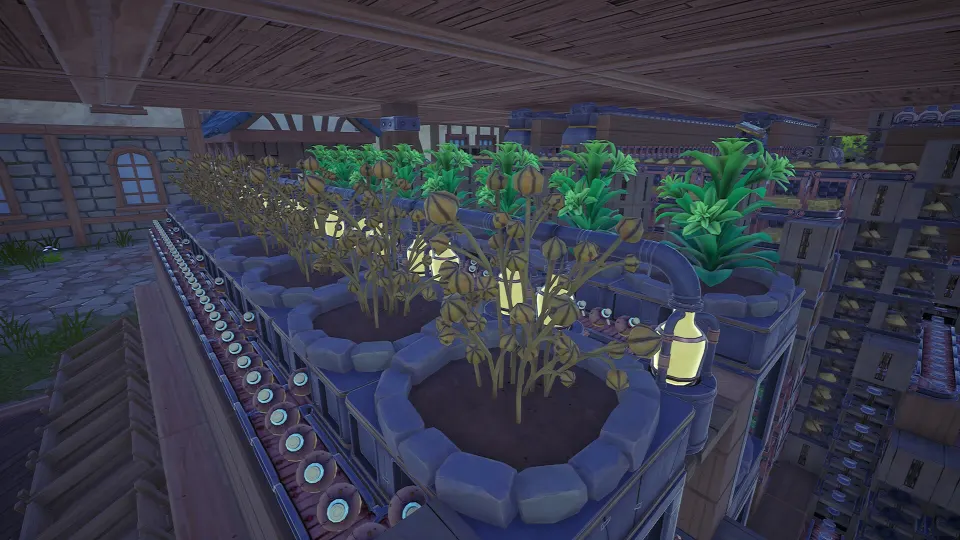
Healing Potions create the next pressure point. They require processed Flax Fiber and Sage Powder, meaning the crop supply that helped with rope may now be competing with the potion objective. Redirect production deliberately rather than assuming more machines will fix a shortage.
Later goals introduce liquids, fertilizer, advanced metals, and larger multi-step chains. At that stage, the best response is rarely to expand every branch. Find the one ingredient that is arriving slowest, increase that capacity, and give the finished quest product enough storage to accumulate safely.
How to Prepare for Random and Shop Quests
Random Quests are not the same as the Main Quest, but preparing for them can reduce interruptions and improve your shop’s performance. Community experience suggests requested items generally come from goods that can be sold, along with some unusual exceptions such as Yeast Powder and catalysts.
The pool can vary by unlocked tier, so do not treat any static checklist as guaranteed. Instead, create a modest reserve of flexible, commonly useful goods near the mailbox or dispatch area.
| Item group | Good reserve candidates | Why they are practical |
|---|---|---|
| Basic goods | Salt, bricks, wooden pulleys | Common products with broad production use |
| Processed materials | Clay, selected ingots, glass | May support building and occasional requests |
| Potions | Healing Potions, Vitality Potions | Useful products that also connect to progression |
| Catalysts | Unstable, Fertile, Resonant Catalysts | Commonly reported as possible requests |
| Specialty supplies | Yeast Powder | Frequently mentioned as an unexpected request item |
| High-value goods | Jewelry and relic-related outputs | Useful only after your core chain is secure |
A reserve should be small enough that it does not starve the active Main Quest. One storage unit for a few frequently requested products is usually safer than an enormous warehouse full of every unlocked item.
Use this priority order when a new optional request appears:
- Check whether its ingredients overlap with your Main Quest line.
- Fill it immediately only if you already have surplus stock.
- Queue production if it uses spare capacity and does not create a bottleneck.
- Skip or delay it when it would consume critical crops, metals, coins, or catalysts.
- Reassess after finishing the current Association assessment and opening new research.
Shop Recognition can also provide useful upgrades and unlocks. Treat it as a support system: improve it when it increases the shop’s ability to fund, sell, buy, or automate the production chain you already need. It should not become a reason to postpone the next Alchemy Level.
Build a Factory Around the Current Item
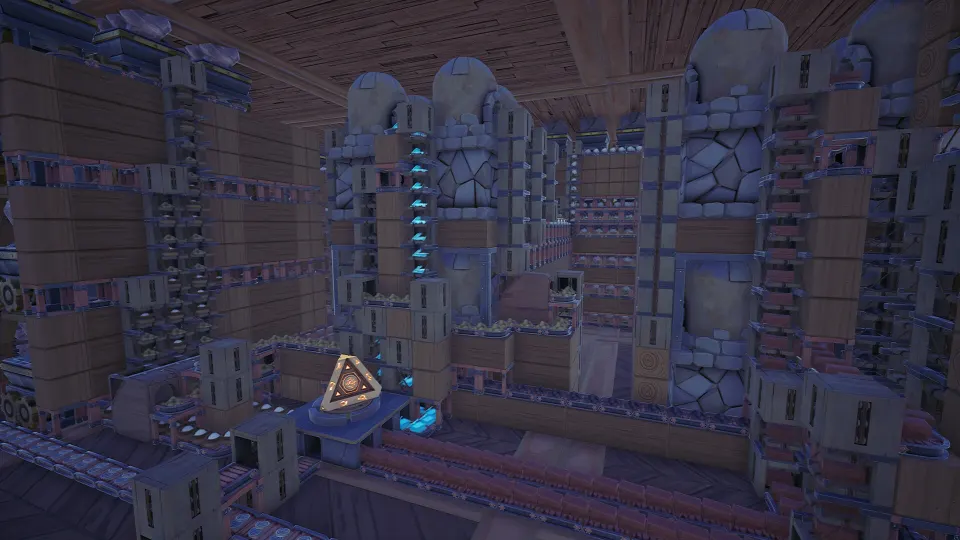
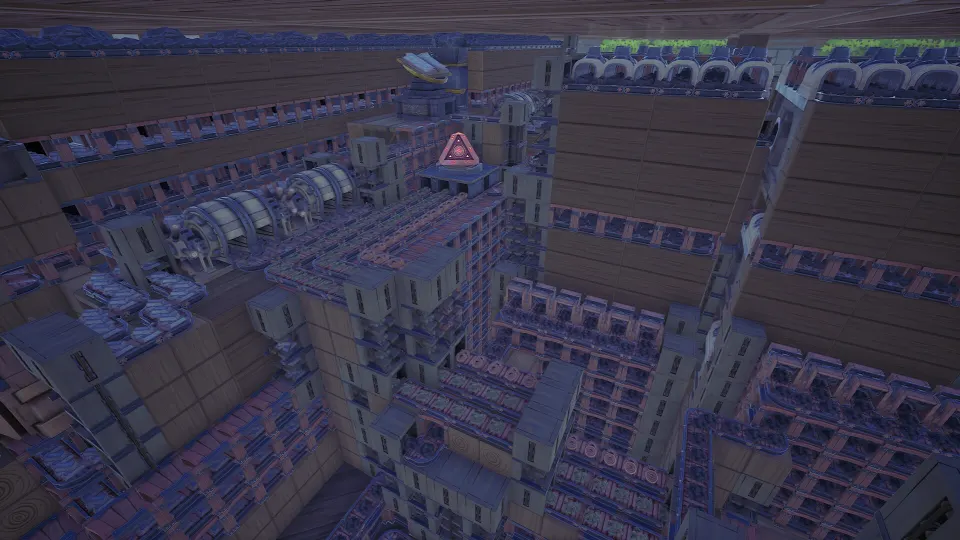
The most efficient layout is not necessarily the largest one. Early tutorial setups become obsolete quickly, so keep them easy to replace. Building a permanent-looking factory before the next research tier opens often leaves you with machinery optimized for an item you no longer need.
Start every Main Quest item with a backward trace. For example, a potion requires its herb and processed intermediates; an advanced product may also require liquid inputs, fuel, heat, fertilizer, or metal components. Follow that chain to the raw input, then identify where flow slows down.
| Bottleneck type | Typical symptom | Useful response |
|---|---|---|
| Raw material shortage | Machines wait for herbs, stone, wood, or ore | Increase gathering, farming, purchases, or input storage |
| Processing shortage | Inputs pile up before one machine type | Add or upgrade that processing stage |
| Heat or fuel shortage | Heated devices pause despite available ingredients | Strengthen fuel delivery and heating capacity |
| Transport blockage | Output sits in machines or belts back up | Add storage, reroute belts, or separate flows |
| Competing demand | One resource feeds multiple important products | Temporarily prioritize the active quest line |
| No research access | Desired device or recipe remains unavailable | Finish the current Association assessment |
Reserve storage is especially valuable. Do not route every finished product directly into sales, contracts, or a Shaper. A buffer lets you complete a quest turn-in without shutting down the rest of the factory or manually reclaiming goods from multiple destinations.
Research should follow the quest, not curiosity alone. If the current assessment needs a potion line, unlock the devices and infrastructure that support that line before buying unrelated branches. This reduces wasted space and makes each Alchemy Level feel like a planned expansion rather than a reset.
Relics become important in late progression. Jupiter, Saturn, Mars, Venus, Mercury, Luna, and Sol are built in a Shaper from increasingly demanding combinations of items. They are valuable shop goods and can be consumed at a Knowledge Altar for skill points. Sol is the final Main Quest turn-in, so preserve its upstream supply rather than selling every high-tier output as soon as it appears.
FAQ
What are Alchemy Factory quest items?
Alchemy Factory quest items are products requested by the Main Quest, Random Quests, shop-related systems, or other objectives. Main Quest items are the most important because completing the Association assessment raises Alchemy Level and unlocks more Research Tree options.
Do Random Quests advance progression?
Random Quests can provide rewards and useful goals, but they do not normally replace Main Quest progression. If you need another Alchemy Level or a locked research branch, check the active Association assessment.
Which items should I keep in storage for quests?
Keep modest reserves of common sellable goods, useful processed materials, a few potions, catalysts, and Yeast Powder when available. Salt, pulleys, bricks, glass, and selected potions are practical candidates, but the available request pool may change with your unlocked tier.
Should I produce every possible quest item in advance?
No. Producing everything creates storage pressure and can consume materials needed for progression. Maintain small flexible reserves, then prioritize the current Main Quest item and only expand optional stock when your core production has surplus capacity.
Why is my Research Tree still locked after earning money?
Money, contracts, and shop activity do not automatically raise Alchemy Level. Complete the active Main Quest assessment, then inspect the newly available Research Tree options.