Why Carpenter Quests Matter
Alchemy Factory carpenter quests matter because they unlock building pieces that make your workshop easier to organize and expand. They are not the same as Alchemy Association Main Quests, which raise your Alchemy Level and open new research gates.
Treat carpenter work as a practical construction track. Its rewards help you store materials, furnish useful spaces, and solve building limitations without distracting from the production objective currently blocking your next level.
Community reports identify five commonly associated carpenter-quest rewards: a box, bed, counter, wall shelf, and railing. Exact requirements, order, and rewards can change with updates, so inspect the active quest before committing rare materials.
| Reward | Likely use in a factory | Why it is useful |
|---|---|---|
| Box | Local material storage | Keeps inputs or finished goods near a production block |
| Bed | Interior furnishing | Adds a residential or workshop furnishing option |
| Counter | Shop or room furnishing | Helps shape a more deliberate customer-facing area |
| Wall Shelf | Vertical storage or decoration | Uses wall space instead of valuable floor area |
| Railing | Elevated-floor safety and layout | Makes upper levels easier to define visually |
The most valuable carpenter reward depends on your current factory problem. A box is usually immediately useful when belts, machines, and inputs are crowding one area. Railings and shelves become more appealing once you are designing multiple floors or trying to make a dense workshop understandable at a glance.
Do not assume every building object is purely decorative. A missing construction piece can prevent a blueprint from being placed, even when your production economy is otherwise ready for expansion.
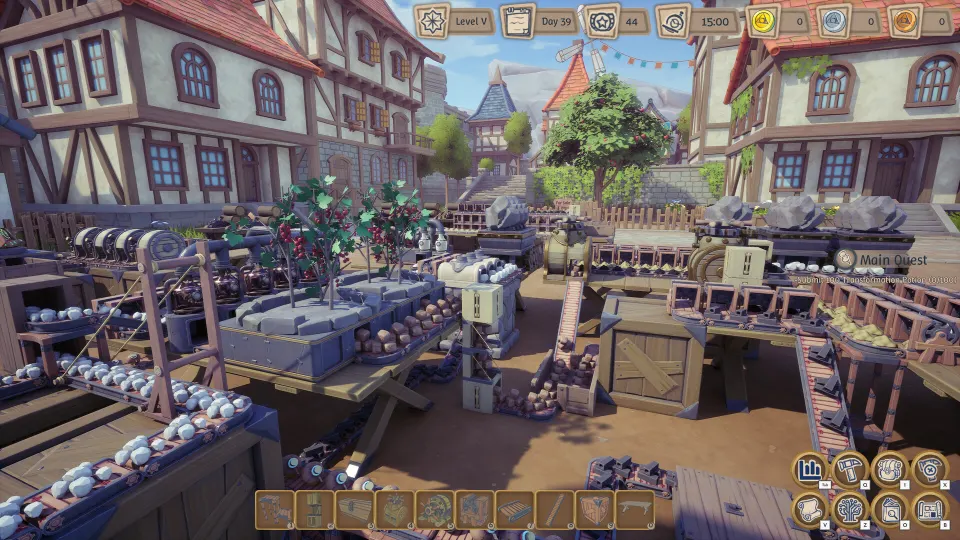
Finding and Completing Carpenter Work
Check your available quests regularly rather than waiting until a building placement fails. The mailbox outside the shop can indicate when a new quest is available, and its active hand-in requirement is the dependable place to confirm what the carpenter needs now.
Carpenter quests are supporting progression. They can improve the way your factory functions, but completing them does not replace the Association assessment when your goal is to increase Alchemy Level.
Use this simple priority order when several tasks compete for the same materials:
- Protect ingredients required by the active Main Quest first.
- Complete a carpenter quest early if its reward solves an immediate building or storage problem.
- Delay cosmetic-oriented rewards if they would slow a critical potion, rope, or other assessment batch.
- Keep a small reserve of common construction inputs so a new hand-in does not halt your factory.
- Recheck the Research Tree after an Association completion, then decide whether a carpenter unlock enables the layout you want.
| If you need to... | Prioritize | Reason |
|---|---|---|
| Unlock the next research tier | Main Quest | Association assessments raise Alchemy Level |
| Place a blocked building blueprint | Relevant carpenter quest | A construction reward may be the missing requirement |
| Prevent ingredients from clogging a line | Box-related reward | Local buffering reduces transport pressure |
| Improve an upper floor | Railing or structural unlocks | Defined edges make elevated layouts clearer |
| Improve shop presentation | Counter or furnishing reward | Best done when essential production is stable |
The key is avoiding a false choice between “quests” and “factory building.” Carpenter objectives often support the factory, while Main Quests determine whether major new systems become available. Finish the construction task when it removes a real constraint; otherwise, keep your resources pointed at the current Association target.
If a quest is ready to turn in, do so before building around a workaround. It may unlock the exact item that lets you simplify the layout instead of adding awkward belts, narrow corridors, or temporary storage piles.
Building Unlocks, Beams, and Factory Layout
A common point of confusion is the word “beam.” There can be a difference between a vertical support available through the building tool and a horizontal beam unlocked through carpenter progression.
The vertical version supports upward construction at a specific location. A horizontal beam can bridge a gap when supported at both ends, making it especially useful for floors or blueprints that would otherwise require tightly packed supports beneath them.
| Construction piece | What it does | Best placement habit |
|---|---|---|
| Vertical beam | Supports construction from below | Place it where upper floors need direct support |
| Horizontal beam | Bridges between supported points | Use it to span a planned gap, not as random decoration |
| Railing | Defines elevated edges | Add after confirming the floor’s machine and belt routes |
| Wall shelf | Uses vertical wall space | Keep it away from access paths and interaction points |
| Box | Buffers inventory near workstations | Put it before or after the machine creating the bottleneck |
If a blueprint reports that a beam is locked, first verify whether the problem is an unlock rather than a lack of materials. Upgrading a building tool may help with some construction capabilities, but it does not necessarily grant every carpenter-related item automatically.
When you unlock a new building piece, test it in a small, disposable area before rebuilding an entire production wing. This is particularly important for upper floors. You want to know where supports must sit, how much clearance machines need, and whether belts can still reach their destinations.
A clean expansion process looks like this:
- Read the blueprint’s locked-item or support warning carefully.
- Check the carpenter quest list and turn in any completed relevant task.
- Confirm whether you need a vertical support, horizontal beam, or both.
- Build a short test span with clear access around it.
- Place one machine and its input/output route before copying the design.
- Scale only after the test section runs without blocking movement or logistics.
This approach keeps construction errors cheap. It also prevents a familiar mid-game problem: rebuilding a large floor only to learn that a support must sit directly through a belt lane or machine row.
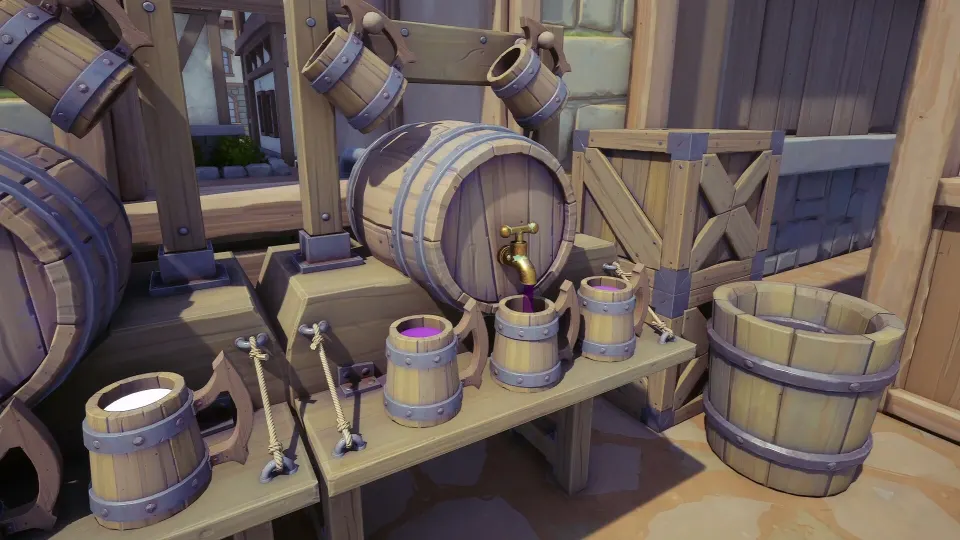
Planning Carpenter Rewards Alongside Progression
The strongest factory layouts are built around current production needs, not around a permanent early-game blueprint. New Alchemy Levels can add processes that change the space, storage, and routing your next production chain needs.
For example, early progression moves from basic gathering and processing into flax-based production, then larger potion requirements. Those chains compete for materials and floor space. A carpenter reward that adds convenient storage can be more valuable than another decorative object when your flax, herbs, or intermediates keep arriving faster than the next machine can use them.
| Progression situation | Construction concern | Useful carpenter-focused response |
|---|---|---|
| Early basic processing | Starter area becomes crowded quickly | Use boxes to separate logs, stone, and outputs |
| Linen Rope production | Flax passes through multiple steps | Buffer intermediates near the slowest stage |
| Healing Potion production | Flax and sage chains compete | Reserve space for separate input storage |
| Multi-floor expansion | Supports restrict floor plans | Test beams and railings before committing to a large layout |
| Late-game complex chains | Many expensive inputs need protection | Create distinct storage zones and avoid mixed lines |
Keep a reserve instead of routing every item directly onward. Boxes and local buffers are especially helpful when a machine runs intermittently, a belt backs up, or an active quest suddenly needs a batch of materials you normally consume.
You can also use carpenter rewards to reduce visual confusion. A railing can mark the edge of a production floor, while shelves and counters can make non-production spaces distinct from logistics corridors. That sounds cosmetic, but readable layouts are easier to troubleshoot when several systems operate at once.
Do not overbuild just because an unlock becomes available. A compact, tested storage point beside an active bottleneck is usually more useful than furnishing a whole room that your factory does not need yet. Let the Main Quest identify the next production challenge, then use carpenter rewards to make that challenge easier to build and maintain.
FAQ
How many Alchemy Factory carpenter quests are there?
Community discussion has identified five common carpenter-related rewards: box, bed, counter, wall shelf, and railing. The exact number of quests and their current requirements should be checked in-game, since updates may change them.
Do carpenter quests increase Alchemy Level?
No. Alchemy Level progression comes from completing the Alchemy Association Main Quest. Carpenter quests support construction and layout rather than opening level-gated research by themselves.
Why does a blueprint say that a beam is locked?
You may be missing a carpenter-related horizontal beam unlock, even if you can place vertical supports with the building tool. Check active carpenter quests, collect any ready reward, and confirm the blueprint’s support requirements.
Should I finish carpenter quests before Main Quests?
Usually, prioritize the Main Quest when it is blocking your next Alchemy Level. Complete a carpenter quest first when its reward directly fixes a storage, blueprint, or structural problem holding back the same production goal.
What is the best early reward from alchemy factory carpenter quests?
A box is often the most immediately useful reward because it provides nearby buffering for materials and outputs. Its value rises when a production line is crowded or when you need to preserve ingredients for a quest hand-in.